
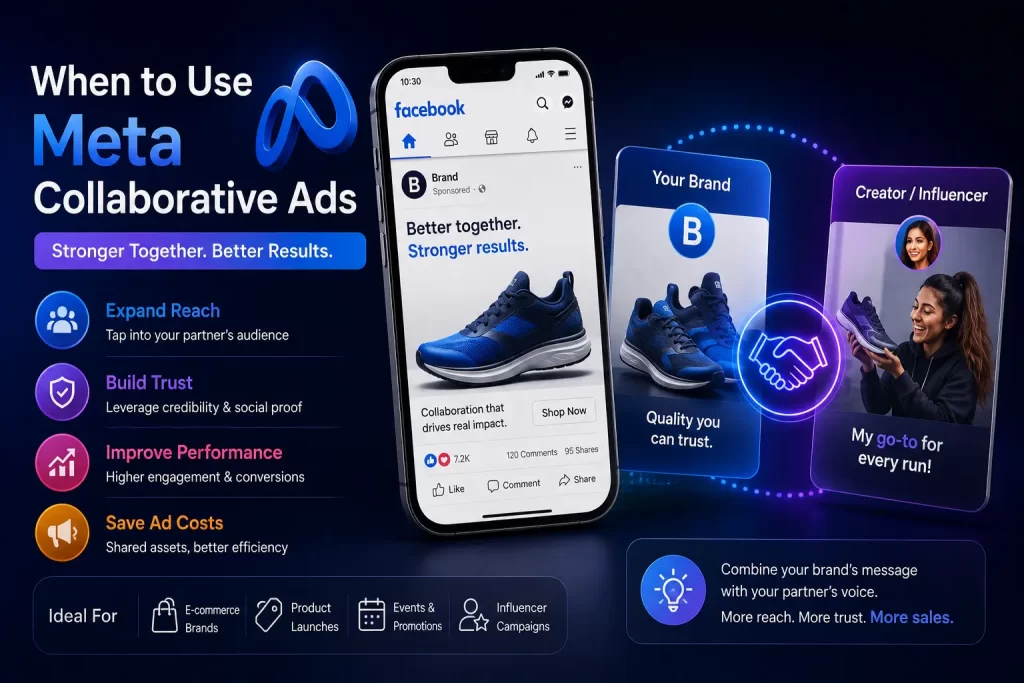
When to use Meta Collaborative Ads is a harder question than most guides make it sound, and the honest answer depends entirely on where your brand actually stands right now, not on how impressive the Britannia or Coca-Cola case studies sound. Knowing when to use Meta Collaborative Ads matters because running this format too early often exposes problems rather than solving them. This guide walks through exactly when to use Meta Collaborative Ads, when to wait, and how to tell the difference.
READINESS CHECK
When to Use Meta Collaborative Ads: The Real Readiness Checklist
Being registered on Zepto or Blinkit is not enough on its own to know when to use Meta Collaborative Ads. Three deeper factors actually determine readiness.
Catalog health comes first. Your product listings need accurate pricing, current stock availability, and complete product information, since Meta Collaborative Ads pull this data automatically and display it exactly as is.
Organic sell through rate matters just as much when deciding when to use Meta Collaborative Ads. If your products already sell reasonably well without any advertising, Meta Collaborative Ads will amplify that momentum. If they barely sell without promotion, ads often just mask a deeper listing or pricing problem rather than fixing it.
Business stage plays a role too. Brands with at least a few months of stable sales history on the platform see far more predictable results from Meta Collaborative Ads than brands that just launched and have no performance baseline yet.
If your paid sales share is climbing while your organic sales share is falling, your ad spend on Blinkit or Zepto is likely masking a listing quality problem rather than genuinely solving it. Fix the catalog first, then use Meta Collaborative Ads.
WHEN IT MAKES SENSE
When to Use Meta Collaborative Ads: The Right Moments
Meta Collaborative Ads work best for categories built around unplanned, impulse driven purchases. According to Meta’s own CPAS Playbook for Retail and Quick Commerce, seventy five percent of shoppers report making more unplanned purchases through quick commerce, and Meta Collaborative Ads are specifically built to capture that exact behavior.
Festive season is another strong signal for when to use Meta Collaborative Ads. Forty five percent of festive shopping in India now happens through quick commerce platforms, making this exactly the window where Meta Collaborative Ads deliver the strongest return.
High frequency FMCG categories, snacks, beverages, personal care, and household essentials, consistently perform best with Meta Collaborative Ads, since customers already buy these items regularly and need only a small nudge at the right moment.
WHEN TO WAIT
When Not to Use Meta Collaborative Ads Yet
Knowing when not to use Meta Collaborative Ads is just as important as knowing when to use them. Skip this format, at least for now, if your organic sales on the platform are weak. Advertising on top of a genuine demand problem simply increases spend without fixing the underlying issue.
Low frequency, high consideration categories like electronics, appliances, or durable goods generally do not fit Meta Collaborative Ads well, since these are rarely impulse purchases, and the entire mechanism is built around instant, low friction decisions.
New SKUs without any sales history are also a poor fit for Meta Collaborative Ads initially. Give a new product a few weeks of organic performance data before layering paid Collaborative Ads on top of it.
CATEGORY FIT
Meta Collaborative Ads Category Fit: Best vs Poor
| Best Fit Categories | Poor Fit Categories |
|---|---|
| Snacks and Beverages | Electronics and Appliances |
| Personal Care | Furniture and Durable Goods |
| Household Essentials | High Ticket, Considered Purchases |
| Packaged Food | Products With No Sales History Yet |
This is a general pattern, not an absolute rule for when to use Meta Collaborative Ads. A well established electronics brand with strong organic sell through could still see reasonable results, but it faces a structurally harder path than an FMCG brand does.
REAL EXAMPLES
Real Brands That Got the Timing Right
According to noopener Meta’s official coverage of the CPAS Playbook launch</a>, Britannia knew when to use Meta Collaborative Ads and built a full funnel strategy across Blinkit, Zepto, and Swiggy Instamart, cutting Cost Per Purchase by forty five percent. Coca-Cola used Meta Collaborative Ads specifically to optimize its sugar free product line, a clear example of a brand applying this format to a focused, high frequency product rather than its entire catalog at once.
Both brands share a common trait, an already established, high frequency product with stable organic demand before scaling paid spend on top of it.
Start with your single best selling SKU rather than your entire catalog. Prove Meta Collaborative Ads work on your strongest product first, then expand to the rest of your range once you have real performance data.
SELF ASSESSMENT
Quick Self Assessment: Is It Time Yet
Are your prices accurate and is your stock consistently available across the platform right now.
Are your products already selling reasonably well on Zepto or Blinkit without any advertising support.
Does your product fit an impulse or high frequency purchase pattern, rather than a considered, high ticket decision.
Has your product been live on the platform long enough to have a real, stable performance baseline.
Are you approaching a high demand window like festive season, where quick commerce behavior spikes significantly.
If you answered yes to most of these, now is the right time to use Meta Collaborative Ads. If you answered no to two or more, fix those areas first before spending on ads.
Expert Insight
Most brands never actually ask when to use Meta Collaborative Ads, they just turn it on because a case study looked impressive. The brands that fail almost always skipped the readiness check entirely and assumed the format itself would fix weak organic sales.
How Sanrovax Helps
Sanrovax helps quick commerce brands figure out exactly when to use Meta Collaborative Ads, so budget goes toward campaigns built to succeed rather than campaigns masking a deeper listing problem.
Talk to SanrovaxFrequently Asked Questions
1. Meta Collaborative Ads kab use karna sahi rahega?
Use Meta Collaborative Ads once your catalog is accurate, your organic sales are already healthy, and your product fits an impulse purchase pattern like snacks, beverages, or personal care.
2. Should every brand on Zepto or Blinkit use Meta Collaborative Ads?
No, this format works best for high frequency, impulse driven categories with already healthy organic sales, not every registered seller automatically benefits from it.
3. Naya product launch hone ke turant baad Meta Collaborative Ads use kar sakte hai kya?
It is usually better to wait a few weeks and gather organic sales data first, since using Meta Collaborative Ads on a completely new product without any performance history is far less predictable.
4. Which product categories are the right fit for Meta Collaborative Ads?
Snacks, beverages, personal care, and household essentials are the right fit, since these categories rely on frequent, low consideration purchases.
5. Electronics ya furniture brands ke liye Meta Collaborative Ads sahi hai kya?
These categories generally see weaker results, since purchases in this space are considered decisions rather than impulse buys, though an established brand with strong organic demand could still see reasonable performance.
6. How do I know it is not yet time to use Meta Collaborative Ads?
If your paid sales are rising while organic sales are falling, that signals advertising is masking a deeper listing or pricing problem rather than genuinely growing demand.
7. Diwali ya festive season Meta Collaborative Ads use karne ke liye sahi time hai kya?
Yes, festive season is one of the strongest windows to use Meta Collaborative Ads, since a significant share of festive shopping in India now happens through quick commerce platforms.
8. Did any major brands know exactly when to use Meta Collaborative Ads?
Yes, Britannia and Coca-Cola both used Meta Collaborative Ads at the right time, with Britannia reporting a forty five percent reduction in Cost Per Purchase and Coca-Cola applying it to a focused product line.
9. Readiness check karne mein kitna time lagta hai?
A basic readiness check can be done within a day by reviewing catalog accuracy and recent organic sales data, though a few weeks of stable performance history gives a more reliable picture.
10. What is the biggest mistake brands make about when to use Meta Collaborative Ads?
Assuming the ad format itself will fix weak sales, when in reality it simply amplifies whatever is already true about the product’s listing and demand.
Conclusion
Knowing when to use Meta Collaborative Ads comes down to an honest look at your catalog, your organic performance, and your category fit, not the appeal of a case study. Brands that get the timing right before scaling paid spend consistently see better, more predictable results than those who jump in first and hope the format fixes everything else.
If you want help figuring out when to use Meta Collaborative Ads for your brand, reach out directly.
Website: https://sanrovax.com Email: sandip@sanrovax.com
1 thought on “When to Use Meta Collaborative Ads: The Honest 2026 Readiness Test”